

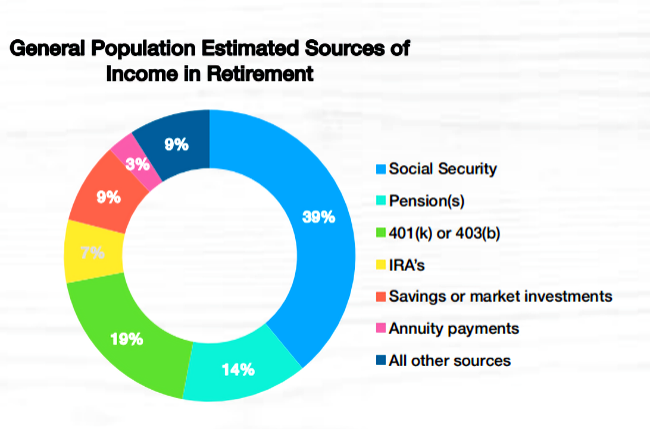

Retirement income is not considered earned income.
The FEIE allows Americans to exclude a certain amount of foreign-earned income from taxation — up to $126,500 in tax year 2024 ($130,000 in 2025).
However, this does not include retirement income, pension, social security or IRA withdrawals.
Retirement income is still taxed from the USA.
If you are making income via retirement, you will STILL have to file your US taxes each year.
The goods news if you are married filing jointly, your standard deduction may wipe out a huge portion of your retirement income.
There’s a common misconception that Social Security benefits are tax-free, but this isn’t always the case. Whether your Social Security benefits are taxed depends on your combined income, which includes your adjusted gross income, non-taxable interest, and half of your Social Security benefits.
Here’s a breakdown of the federal income tax thresholds for Social Security benefits based on your combined income in 2025
- Individual Filers:
- $25,000 or less: Your benefits are not taxed.
- $25,000 to $34,000: Up to 50% of your benefits may be taxable.
- More than $34,000: Up to 85% of your benefits may be taxable.
- Married Filing Jointly:
- $32,000 or less: Your benefits are not taxed.
- $32,000 to $44,000: Up to 50% of your benefits may be taxable.
- More than $44,000: Up to 85% of your benefits may be taxable.
- Taxable Savings and Investments: Income from these sources, such as interest, dividends, and capital gains, is subject to taxation.
- Interest: Generally, interest payments are taxed as ordinary income, unless from tax-free municipal bonds.
- Dividends: Ordinary dividends are taxed as ordinary income, while qualified dividends are taxed at the long-term capital gains rate.
- Capital Gains: Long-term capital gains are taxed at a lower rate than ordinary income, while short-term capital gains are taxed at ordinary income rates.
- Net Investment Income Tax (NIIT): Individuals with modified adjusted gross income (MAGI) above certain thresholds may be subject to an additional 3.8% tax on their net investment income.
In summary, while there isn’t a strict “tax-free limit” for Social Security benefits, the amount of your benefits subject to taxation depends on your combined income and filing status. If your combined income falls below certain thresholds, your benefits may not be taxed at all. However, if your combined income exceeds those thresholds, a portion of your benefits may become taxable.
Make sure to discuss your retirement income with a tax professional before you start collecting.