

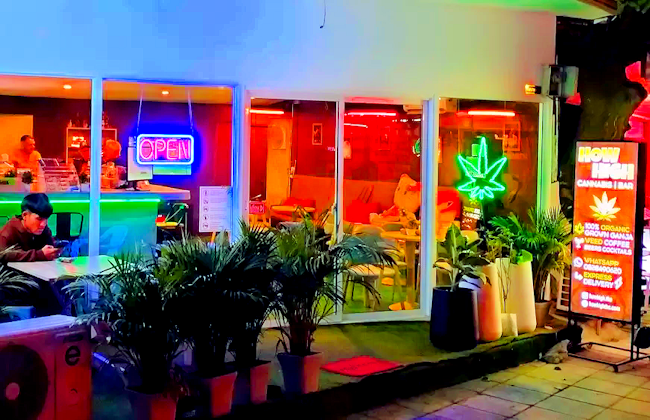

Over 10,000+ Cannabis shops opened when the decision was made to legalize cannabis.
Many saw the opportunity to make a lot of money and soon the market (all over Thailand), was flooded with cannabis shops.
Many foreigners decided to open businesses as well.
Anytime you engage in a business in Thailand based on a controversial topic such as cannabis, there is no guarantee the laws wouldn’t revert back. And they are!
Tourism operators expect many cannabis stores across Thailand to be shuttered, especially in urban areas, leaving only those that supply the herb for medical purposes, as the government moves to recriminalise the plant.
The Ministry of Public Health issued an order late on Tuesday prohibiting the sale of cannabis for recreational use and making it mandatory for any retail purchase to require a doctors’ prescription.
The new rules will come into effect once they are published in the Royal Gazette, which could happen within days.
“Cannabis will be classified as a narcotic in the future,” Public Health Minister Somsak Thepsuthin declared on Tuesday.
The move by the Pheu Thai government is expected to plunge into limbo an industry estimated to be worth over a couple billion, that has boomed since cannabis was taken off the country’s narcotics list in 2022.
The push for new controls on recreational use of cannabis comes just days after the Bhumjaithai Party, which had championed its legalisation, withdrew from the ruling coalition amid a long-running political dispute.
Unfettered recreational use of cannabis has led to many complaints in some parts of the country, especially in tourist areas like Phuket, where there are an estimated 1,500 weed shops.
Nationwide, there are about 18,000 cannabis shops and a surge in cannabis-related health issues has become noticeable, said Damrongkieat Pinijkarn, secretary of the Pattaya Entertainment Association.
He said the new rules would foster a better tourism and living atmosphere in Pattaya.
Over the past three years, he said, many cannabis stores have exploited the absence of a law or any clear regulations to sell weed in all parts of the seaside resort city, putting locals and children at risk, said Mr Damrongkieat.
Many tourists and locals have complained about weed smoking in public areas, such as on the streets and beaches, disturbing their well-being, he added.
After former prime minister Srettha Thavisin attempted unsuccessfully to reclassify cannabis as a narcotic, some cannabis store operators decided to close their shops, said Mr Damrongkieat.
The latest development would prompt more of them to quit, he said, if it is backed up by stricter regulations and enforcement to stop practices that sometimes include bribing police to look the other way.
He said the police can now arrest both operators and smokers who clearly violate the current regulations.
Eventually, Mr Damrongkieat said, the number of cannabis stores is expected to decline to a level that actually matches the demand for medical purposes.
He also stressed that the government should clearly communicate to foreigners how the new stricter rules will be applied. If possible, it should also consider relief measures for affected operators, who have already invested in the business.
Bhummikitti Ruktaengam, vice-president of the Tourism Council of Thailand, said the new regulation should make tourists feel more comfortable, particularly seniors and families with children.
To curb widespread consumption, he said the government could also initiate a proper zoning for cannabis stores.
Unregulated access to cannabis has created serious social problems, particularly for children and young people, said government spokesman Jirayu Houngsub.
“The policy must return to its original goal of controlling cannabis for medical use only,” he said in a statement.
The new push has left some cannabis industry participants, like Punnathat Phutthisawong, who works at the Green House Thailand dispensary in Bangkok, stunned.
“This is my main source of income,” said Punnathat, 25. “Many shops are probably just as shocked because a lot of them invested heavily.”
The cannabis sector could have transformed Thai agriculture, medicine and tourism, but uncertainty and policy reversals have stymied any sustainable growth, said cannabis activist Chokwan “Kitty” Chopaka.
“The cannabis industry has become a hostage to politics,” she said.
Source: Bangkok Post