

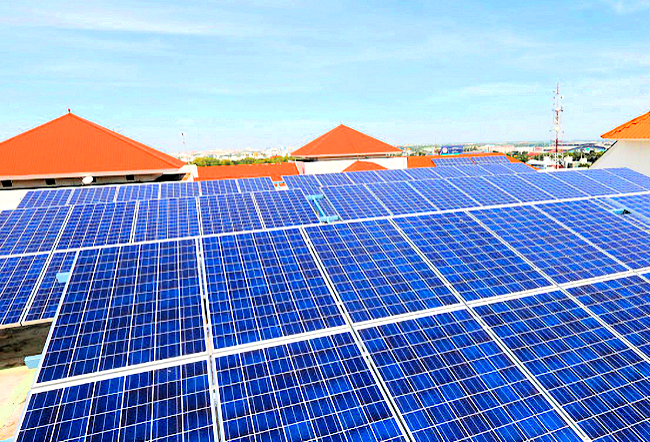

In Thailand in 2026, a full professionally installed 20kW solar system with lithium battery storage typically costs:
Realistic Total Installed Cost (2026)
| System Type | Typical Installed Cost |
|---|---|
| 20kW On-Grid ONLY (no batteries) | ฿350,000–550,000 |
| 20kW Hybrid + Small Battery Backup | ฿550,000–850,000 |
| 20kW Hybrid + Large Whole-Home Battery System | ฿800,000–1,500,000+ |
The biggest factor is the battery size. Batteries are now the most expensive part of large systems.
What a “Full 20kW System” Usually Means
A serious residential or small commercial Thai installation usually includes:
- ~32–40 solar panels
- Hybrid inverter
- Lithium battery bank
- Mounting rails
- DC/AC protection
- Wiring
- Breakers
- Installation labor
- PEA/MEA paperwork
- Monitoring app
- Grounding/lightning protection
Best Overall Hybrid Setup (Typical 2026 Thailand Build)
Hybrid Inverter
Huawei Inverter 20KW 3Phase SUN2000-20KTL-M5
THB 69,015.00•ideasolarshop.com
This is the type of inverter commonly used in higher-end Thailand installations because:
- supports batteries,
- supports backup loads,
- reliable in Thai heat,
- excellent monitoring apps,
- works well with 3-phase homes.
Typical Panel Setup
Most installers now use:
- Jinko
- Longi
- Canadian Solar
- Trina
A 20kW system usually needs:
- ~32 panels at 630W
OR - ~36–40 panels at 500–580W
Example panel:แผงโซล่าเซลล์ 630W Mono Jinko Half · THB 2,575.00
Large modern Jinko mono panels commonly used in Thailand residential and farm installations.
Battery Costs Are the Game Changer
For whole-home backup, most people want:
- 20–40kWh battery storage.
Example large lithium battery:JM 48V 51.2V 600ah 30kwh LiFePO4 Solar Power Lithium Ion Energy · THB 97,814.94
Large LiFePO4 lithium battery capacity suitable for major residential solar backup systems.
Typical 20kW Thailand System Sizes
| Home Type | Recommended Battery |
|---|---|
| Daytime savings only | No battery |
| Basic blackout backup | 10–15kWh |
| Full night backup | 20–30kWh |
| Heavy AC + farm + pumps | 30–50kWh |
Product Comparison Table
| Attribute | Huawei Inverter 20KW 3Phase SUN2000-20KTL-M5THB 69,015.00•ideasolarshop.com | แผงโซล่าเซลล์ 630W Mono Jinko HalfTHB 2,575.00•r3solarcell.co.th | JM 48V 51.2V 600ah 30kwh LiFePO4 Solar Power Lithium Ion EnergyTHB 97,814.94•JMBatteries + others | SUNGROW Inverter On Grid รุ่น SG20RT 3 เฟส 20kWTHB 76,640.00•Lazada Thailand | อินเวอร์เตอร์โซล่าเซลล์ Deye String Inverter 20KW on grid inverterTHB 40,200.00•SCG Home |
|---|---|---|---|---|---|
| Type | Hybrid inverter | Solar panel | Lithium battery | On-grid inverter | On-grid inverter |
| Approx Price | ฿69k | ฿2.5k/panel | ฿98k | ฿76k | ฿40k |
| Battery Support | Yes | — | — | Limited | No |
| Best Use | Premium hybrid homes | Large arrays | Whole-home backup | Grid-tie savings | Budget systems |
| Warranty | ~10 years | ~30 years performance | Varies | ~10 years | Varies |
| Suitable For Off-Grid | Partial | Yes | Yes | No | No |
Real-World Thailand Examples
Budget 20kW On-Grid System
- No batteries
- Daytime savings only
- 3-phase inverter
- Installed cost:
~฿350,000–500,000
Good for:
- reducing electric bills,
- daytime air conditioning,
- businesses,
- farms.
A real Thai 20kW on-grid package is currently advertised around ฿360k installed.
Real Hybrid Whole-Home Example
20kW + 30kWh Battery
Typical 2026 pricing:
| Component | Approx Cost |
|---|---|
| Panels | ฿120k–220k |
| Hybrid inverter | ฿70k–180k |
| 30kWh lithium battery | ฿250k–600k |
| Racking/wiring/protection | ฿80k–150k |
| Labor/install | ฿80k–200k |
| TOTAL | ฿800k–1.5m+ |
Important Thailand-Specific Realities
1. Batteries Still Expensive
This is why many Thai systems are:
- on-grid only,
- or very small battery backup.
Even Reddit solar users regularly note that batteries massively increase total costs.
2. PEA/MEA Export Limitations
Thailand’s grid export rules remain restrictive.
Large systems:
- may not receive full net metering,
- may have export limitations,
- and approvals vary by area.
Many people therefore size systems mainly for:
- daytime self-consumption.
3. Roof Size Requirements
A true 20kW system needs approximately:
| Roof Type | Space Needed |
|---|---|
| Modern high-efficiency panels | ~90–120 m² |
| Older/lower-efficiency panels | ~130–160 m² |
Metal roofs are extremely common and work well in Thailand.
4. Three-Phase Power Usually Required
Most genuine 20kW systems:
- require 3-phase electric service.
Many rural Isaan homes only have:
- single-phase service.
Upgrading to 3-phase from PEA can add:
- ฿30,000–150,000+ depending on transformer distance.
5. Heat Matters in Thailand
Cheap batteries die fast in Thai heat.
The best systems use:
- LiFePO4 batteries,
- proper ventilation,
- shaded inverter locations,
- quality surge/lightning protection.
Thailand lightning damage is a major real-world issue.
What Most Experienced Thailand Owners Actually Recommend
Best Value Strategy
For most Thailand homes:
10–15kW solar + 10–20kWh battery
Why?
- much cheaper,
- better ROI,
- easier approvals,
- enough for most homes,
- still runs AC during outages.
Monthly Savings Estimate
A properly sized 20kW system in Thailand can often reduce bills by:
| Usage Pattern | Approx Savings |
|---|---|
| Moderate home | ฿8k–15k/month |
| Heavy AC usage | ฿15k–30k/month |
| Farm/business | Much higher |
Thai installers commonly advertise ~฿12k–16k/month savings for 20kW systems.
Expected Payback Time
| System Type | Typical ROI |
|---|---|
| On-grid only | 3–6 years |
| Hybrid with batteries | 6–12 years |
Batteries improve backup capability more than financial ROI.
Best Overall Recommendation for Thailand in 2026
| Goal | Best Setup |
|---|---|
| Cheapest ROI | On-grid no battery |
| Blackout protection | Hybrid + small battery |
| Full energy independence | Large hybrid + 30kWh+ battery |
| Rural Isaan resilience | Hybrid + lithium backup |
| Best value overall | 10–15kW + moderate battery |
For most Thailand homeowners, the sweet spot is no longer “maximum solar.”
It’s:
- high-quality panels,
- hybrid inverter,
- moderate battery storage,
- and proper installation quality.