
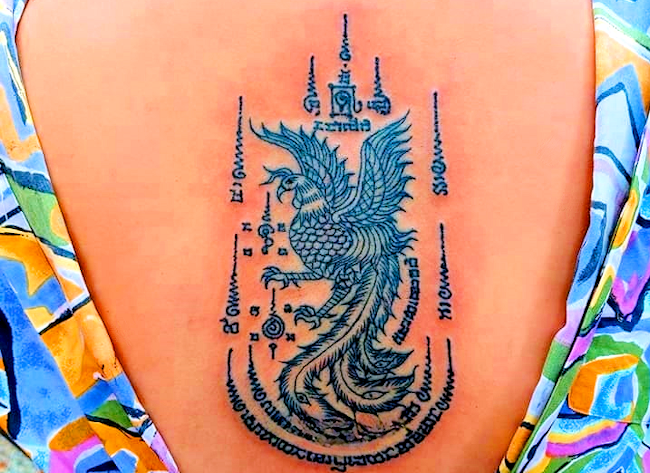

Yantra tattooing or Sak Yant is a form of tattooing using Indian yantra designs. It consists of sacred geometrical, animal and deity designs accompanied by Pali phrases that are said to offer power, protection, fortune, charisma and other benefits for the bearer.
The Sak Yant Master will tattoo using a bamboo needle and ink.
Sak Yant’s masters have skill that requires years of training to create magical texts and charge them with magical power.
There are thousands of traditional designs of yantra tattoos, but some of the most well-known and popular include:
- Ong Phra (Thai: องค์พระ; translation: Buddha’s body) – one of the most commonly used elements in Yantra tattooing, but can also be a more complex standalone design. Meant to provide insight, guidance, illumination, etc.
- Haw-taew (Thai: ห้าแถว; translation: five rows) – Typically tattooed on the back left shoulder. Each of the five lines relates to a different blessing for success and good luck.
- Gao-yord (Thai: เก้ายอด; translation: nine spires) – typically tattooed on the center top of the back in various sizes and levels of complexity. Simple version pictured at the top of this article.
- Si-yot (Thai: สี่ยอด; translation: four spires) – to influence the feelings or actions of others and protect the bearer.
- Paed-thit (Thai: แปดทิศ; translation: eight points) – represents protection in the eight directions of the universe. Round shape; typically tattooed on the center of the back. Pictured in gallery below.
- Sip-thit (Thai: สิบทิศ; translation: ten points) – a version of paet-thit, but protects in ten directions instead of eight.
- Maha-niyom (Thai: มหานิยม; translation: great preference) – to grant the bearer favor in the eyes of others. Round shape; typically placed on the back right shoulder.
- Yot Mongkut (Thai: ยอดมงกุฎ; translation: spired crown) – for good fortune and protection in battle. Round shape; typically tattooed on the top of the head.
- Panchamukhi (Thai: ปัญจมุขี; translation: five Deva faces) – intended to ward off illness and danger.
- Suea-koo (Thai: เสือคู่; translation: twin tiger) – typically depicts twin tigers. Symbolizes strength, fearlessness, and resilience.
- Uṇālom (Thai: อุณาโลม; translation: urna, often left untranslated as “unalome”) – the ūrṇā curl between the eyebrows of the Buddha. Variously described as representing the ‘third eye‘, the path to nirvana, and the coil, line, and point of the syllable ‘Om‘ written in Thai script.
- Hanuman (Thai: หนุมาน; translation: monkey god) – Hanuman is revered for his ability to overcome obstacles and challenges, making the Hanuman Yantra a symbol of resilience and determination.
- Yant Krop Kaew (Thai: ยันต์กรอบแก้ว; translation: diamond shield) – features geometric patterns resembling a diamond or crystal lattice, symbolizing strength and invincibility.
If you plan to get a Sak Yant tattoo in Thailand, please seek out a recognized Sak Yant Master.