

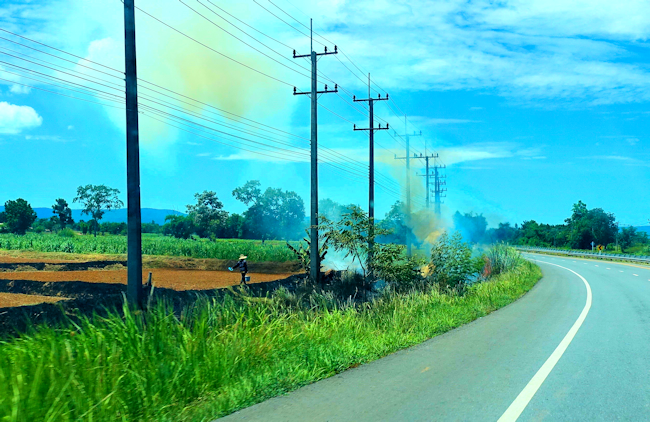

The practice of burning everything in rural Isaan (Northeastern Thailand) is primarily driven by extreme economic pressure, a complete lack of rural waste infrastructure, and deeply ingrained agricultural traditions.
While it looks like indiscriminate burning to outsiders, what you are seeing is actually a combination of three distinct practices.
1. Large-Scale Agricultural Clearing
The most massive and visible fires occur during the dry “burning season” (typically December to April).
- The Cost Trap: Roughly 40% of Thai farmers live below the poverty line. Setting fire to fields is free. Buying or renting mechanical harvesters and tractors to clear land costs money they do not have, which would force them deep into debt.
- Sugarcane Demands: Sugarcane is a massive cash crop in Isaan. Smallholder farmers intentionally burn the sharp, thick leaves off the cane stalks right before cutting them. This dramatically cuts down manual labor hours and prevents workers from getting cut by the leaves.
- Rice Stubble & Natural Fertilizer: After the rice harvest, millions of tons of rigid stubble remain in the paddies. Fire clears the fields instantly for the next planting cycle. The remaining ash acts as a quick, free natural fertilizer, bypassing the need for expensive chemical imports.
2. A Lack of Rural Waste Management
If you notice small, daily piles of plastic, food wrappers, and household trash being burned around sunset, it comes down to a lack of options.
- No Remote Trash Collection: In deep rural villages, municipal garbage trucks simply do not operate. Without a public disposal system, trash builds up rapidly.
- Pest and Odor Control: In the tropical heat of Isaan, pile-ups of household garbage attract dangerous pests like cobras, scorpions, rats, and swarms of mosquitoes. Burning the garbage is the traditional way to sanitize the living space, eliminate smells, and smoke out bugs.
- Avoiding Fees: Even in villages where a local garbage service exists, it often requires a monthly fee. For a family living on a razor-thin subsistence budget, burning the trash is a preferred way to save cash.
I see burnings on a daily basis, despite all the government rules and regulations, there is NO enforcement to stop the burning.